

Oct 2026
Beyond the Building: The Conversation
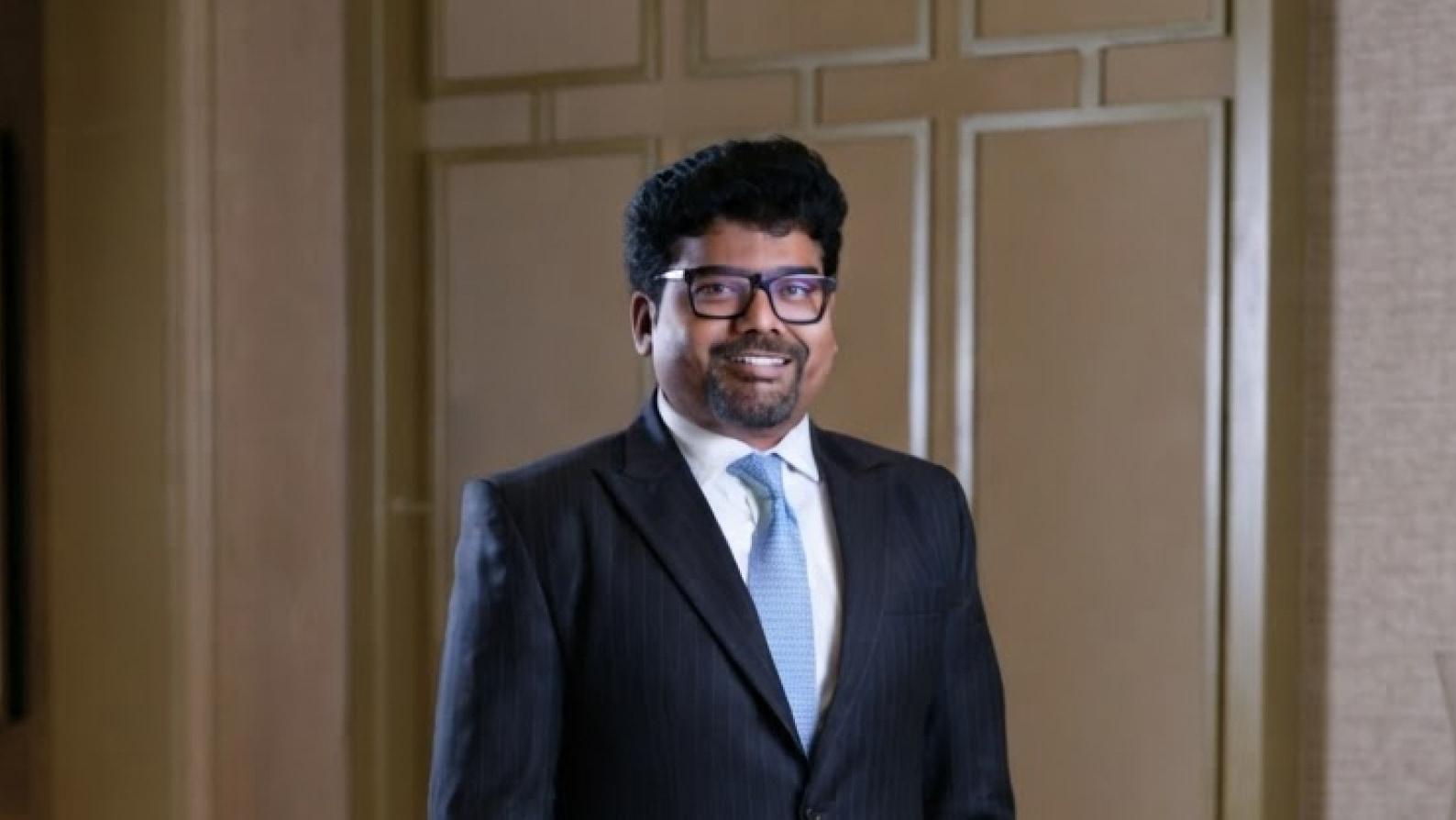
1. You've been in commercial leasing for close to a decade now. How have you seen this South market evolve, especially in occupier demand and tenant expectations?
The market has moved well beyond a conversation about rent and square footage. A decade ago, occupiers across Bengaluru, Hyderabad and Chennai were largely comparing cost per desk. Today, they're evaluating the full workplace ecosystem, including air quality, energy efficiency, wellness infrastructure, and how well a campus supports flexible ways of working.
What's changed most is when this conversation happens. Occupiers now engage on ESG credentials, business continuity and long-term scalability at the site-selection stage, not after signing. That's especially true of global occupiers in the South, who are looking beyond square footage to integrated ecosystems with spaces that can scale with them over five, ten, or even fifteen years. Hyderabad and Chennai in particular have matured fast on this front. Cities that used to be considered secondary to Bengaluru now compete directly for the same marquee GCC mandates, and tenant expectations have risen to match.
2. According to you, what's the real potential in this space, and where do you see the strongest growing demand in the South, which sectors or asset types?
India now hosts 2,000+ global capability centres, and they account for nearly half of all Grade A office leasing nationally. That is not a niche trend; it is now the primary driver of demand in this sector. Bengaluru, Hyderabad and Chennai continue to draw the largest share of GCC leasing, with GCCs accounting for the majority of total office absorption in each of these markets.
Alongside GCCs, technology, BFSI, and engineering and manufacturing occupiers remain consistent demand drivers, giving the sector a broader base than it had five years ago. Our own portfolio reflects this shift closely, with over 70% of our tenants across RMZ global capability centres, occupying close to 9.5 million sq ft. That tells us where the real, durable demand in this market sits.
3. GCCs have clearly become a major growth engine for the industry. How sustainable do you see that demand over the next 3–5 years?
I'd call it structural rather than cyclical. GCCs in India have moved well past being cost or delivery centres. They now house core functions like engineering, R&D, AI and cybersecurity for their parent organisations. That changes the nature of the commitment: longer lease terms, larger footprints, and a much higher bar on infrastructure and talent access.
The numbers back this up. India already has 2,000+ GCCs generating close to $98 billion in revenue, and Nasscom Zinnov report projects that to cross $100 billion by 2030, with headcount expected to pass 2.5 million. That's not a market plateauing; it's one still compounding. If anything, the mandate given to these centres is expanding, which typically translates into deeper, not shorter, real estate commitments.
4. RMZ has always been known for its quality and commands a premium. What is the key differentiator that attracts this clientele?
Our clientele today is overwhelmingly global capability centres, which tells you that they're buying into an integrated campus built for long-term scalability and not just a building.
What global occupiers prioritise now is employee experience and future-readiness, with infrastructure that can absorb their growth without repeated relocation or disruption. Curated retail has become a meaningful part of that equation. Our retail portfolio has grown to 575,000 sq ft across close to 100 brands, with 97% occupancy, and roughly 35–40% of footfall now comes from consumers outside the office population. That tells us these developments are functioning as destinations, not just workplaces with amenities attached.
Our approach to retail is deliberately market-specific rather than a template. In Hyderabad, for instance, The Loft has brought in first-to-market concepts shaped by what that particular consumer base is looking for, rather than a standard retail mix repeated across cities. As premium office developments increasingly compete on overall experience, that kind of curated, locally tuned retail is becoming a genuine differentiator, not a footnote.
5. For investors watching this sector closely, what should they be paying attention to, both the opportunities and the risks?
The opportunity is the breadth and durability of demand. This isn't a single-sector story in the South. Bengaluru, Hyderabad and Chennai are all absorbing simultaneously, and within each city, GCCs sit alongside BFSI, technology, and engineering and manufacturing demand. That gives the region more resilience than a market dependent on one sector or one city.
The risk to watch is quality bifurcation. Demand is increasingly concentrated in Grade A, well-located, integrated assets, and occupiers are far less willing to compromise than they were a few years ago. Investors backing undifferentiated or poorly located supply are likely to see that gap widen, even as headline absorption numbers for the region stay strong.
6. Looking ahead, where do you see this space, and RMZ's portfolio, heading over the next few years?
The direction is clear: integrated, campus-scale developments built around the employee experience and long-term scalability that global occupiers are now prioritising. That's less about individual buildings and more about ecosystems with assets that can grow with a tenant's mandate over a decade or more.
About the Author:
Julian Francis is the Associate Director at RMZ Real Estate. He currently heads the South region covering commercial, industrial, hospitality, retail etc. He is senior real estate professional that brings strong strategic, execution and people leadership capabilities. His expertise spans team building, deal-making, revenue growth, portfolio management, project management, and business transformation.